

The 10 Invisible Assets That Create Wealth
- Aboubacar Moussa Konate

- Jun 21
- 4 min read
Updated: Jun 23
Introduction
Most people spend their lives chasing visible assets.
Money in the bank.
A bigger house.
A luxury car.
A growing investment portfolio.
Yet the people who create extraordinary wealth often focus on something else entirely.
They invest in assets that do not appear on a balance sheet.
Assets that cannot be photographed.
Assets that rarely receive public recognition.
Assets that quietly compound for years before producing visible results.
A business can lose money and still possess valuable invisible assets.
An entrepreneur can have little cash and still be building immense future wealth.
An employee can earn a modest income while accumulating invisible advantages that completely transform their future.
The truth is simple:
Visible wealth is often the consequence.
Invisible assets are often the cause.
Here are ten invisible assets that consistently create wealth.

1. Knowledge
Money can disappear.
Knowledge rarely does.
The ability to understand markets, people, technology, sales, investing, negotiation, or leadership creates opportunities that others never see.
A person who understands how businesses generate value can often recover financially even after losing everything.
This is why many entrepreneurs who go bankrupt eventually build wealth again.
They lost their money.
They did not lose their knowledge.
Knowledge compounds.
Every book read, every skill acquired, and every lesson learned becomes part of an invisible asset that no economic crisis can easily erase.

2. Reputation
Reputation is one of the most underestimated wealth-building assets in existence.
People lend money to trusted individuals.
Customers buy from trusted businesses.
Employers hire trusted professionals.
Investors fund trusted founders.
A strong reputation reduces friction.
It lowers resistance.
It creates opportunities before you even ask for them.
A damaged reputation can destroy decades of effort.
A respected reputation can generate opportunities for decades.

3. Relationships
Many fortunes are built through relationships rather than transactions.
The right mentor.
The right partner.
The right customer.
The right investor.
The right employee.
Relationships often determine access to opportunities long before money becomes involved.
Your network is not merely a list of contacts.
It is an invisible bridge connecting you to future possibilities.
4. Time
Time is the only asset equally distributed to billionaires and beginners.
Yet people spend it very differently.
The wealthy often buy back time.
The poor often sell it repeatedly.
Every hour invested in learning, building systems, creating content, developing products, or strengthening relationships becomes a future asset.
Time invested wisely compounds.
Time wasted disappears forever.

5. Discipline
Discipline creates results long before results become visible.
The investor who contributes monthly.
The entrepreneur who publishes consistently.
The trader who follows risk management rules.
The author who writes daily.
Discipline transforms small actions into major outcomes through repetition.
Without discipline, talent frequently fails.
With discipline, ordinary people achieve extraordinary results.

6. Health
Many people discover the value of health only after losing it.
Energy fuels productivity.
Focus fuels decision-making.
Physical and mental health influence every financial outcome.
The ability to think clearly, work effectively, and maintain consistent performance depends heavily on health.
Health is not merely a personal asset.
It is an economic asset.

7. Creativity
Wealth often follows unique solutions.
Creativity allows people to identify opportunities where others see obstacles.
New products.
New services.
New business models.
New investment ideas.
Creativity transforms ordinary resources into extraordinary value.
The market rewards innovation.
Creativity is the engine behind innovation.

8. Personal Brand
People increasingly buy from people.
A strong personal brand creates trust before the first conversation.
It attracts opportunities.
It attracts clients.
It attracts partnerships.
It attracts audiences.
In a digital economy, your reputation and visibility can become one of your most valuable assets.

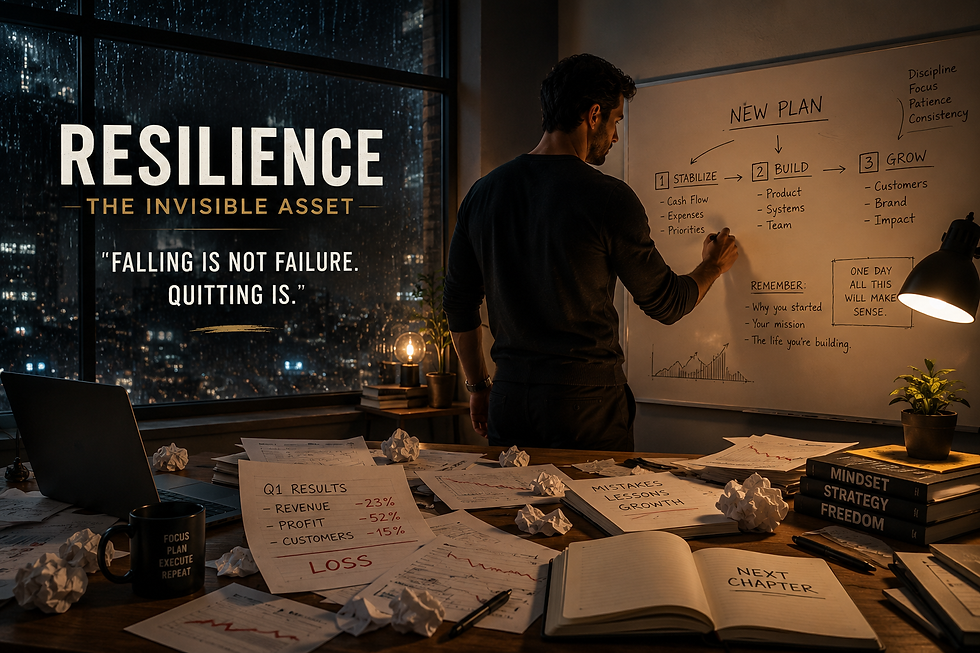
9. Resilience
Every wealth-building journey includes setbacks.
Markets crash.
Businesses fail.
Deals collapse.
Plans change.
Resilience determines whether a temporary defeat becomes a permanent one.
The ability to recover quickly from adversity creates a significant competitive advantage.
Many successful people are not the smartest.
They are simply the ones who refused to quit.
10. Mindset
Every visible result begins with an invisible belief.
People act according to what they believe is possible.
Those who believe wealth is unattainable rarely pursue it.
Those who believe value creation leads to opportunity behave differently.
Mindset influences decisions.
Decisions influence actions.
Actions influence outcomes.
A powerful mindset does not guarantee success.
But a destructive mindset almost guarantees failure.

Conclusion
The world celebrates visible assets.
The luxury home.
The expensive watch.
The investment portfolio.
The successful company.
Yet behind every visible achievement stands a collection of invisible assets accumulated over years.
Knowledge.
Reputation.
Relationships.
Time.
Discipline.
Health.
Creativity.
Personal brand.
Resilience.
Mindset.
These assets rarely appear on financial statements.
Yet they are often the true foundation of wealth.
Build them patiently.
Protect them carefully.
Compound them consistently.
And one day, the visible results may surprise everyone except you.



Comments